Right tool for the right job.

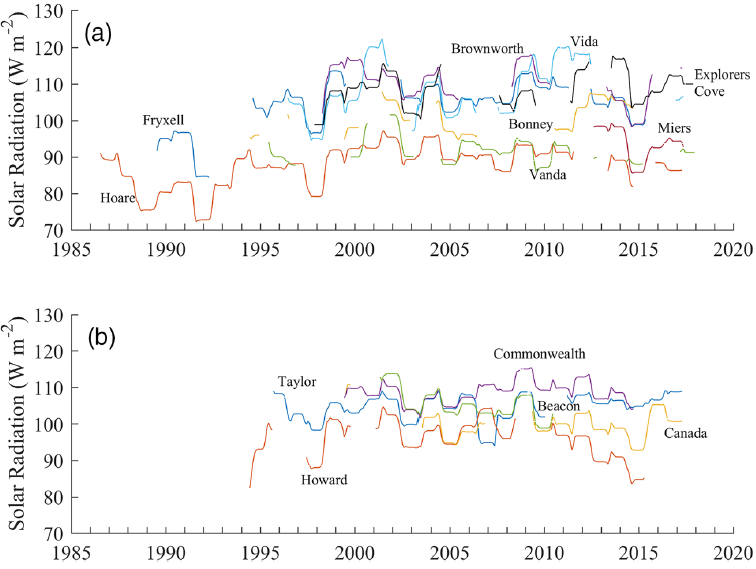
  • Time Series Decomposition.

    Graph showing solar radiation from 1985 to 2020 at various locations, labeled with site names such as Fryxell, Hoare, and Beacon. Two panels labeled (a) and (b) depict variations in solar radiation in watts per square meter (W m²) over time.
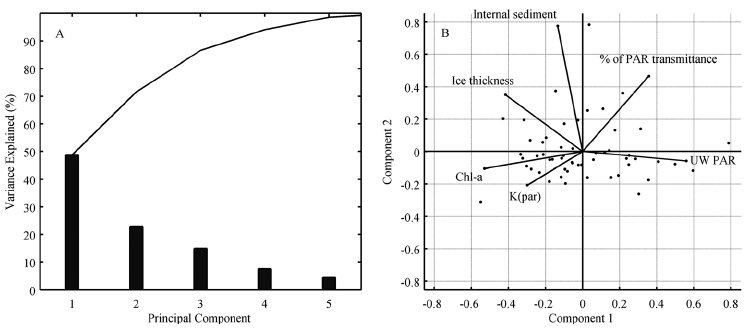
  • Principal Component Analysis.

    Graphical analysis consisting of a scree plot and a biplot from a principal component analysis. The scree plot on the left shows the variance explained by the first five principal components, with a steep initial drop-off. The biplot on the right depicts the relationship between two components, featuring arrows representing variables like internal sediment, ice thickness, and % of PAR transmittance. Data points are plotted on the biplot to show their distribution across the components.
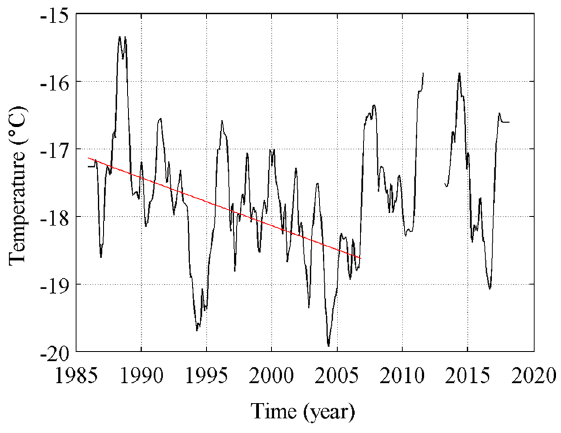
  • Trend Detection.

    Graph of temperature data from 1985 to 2020 with trend line
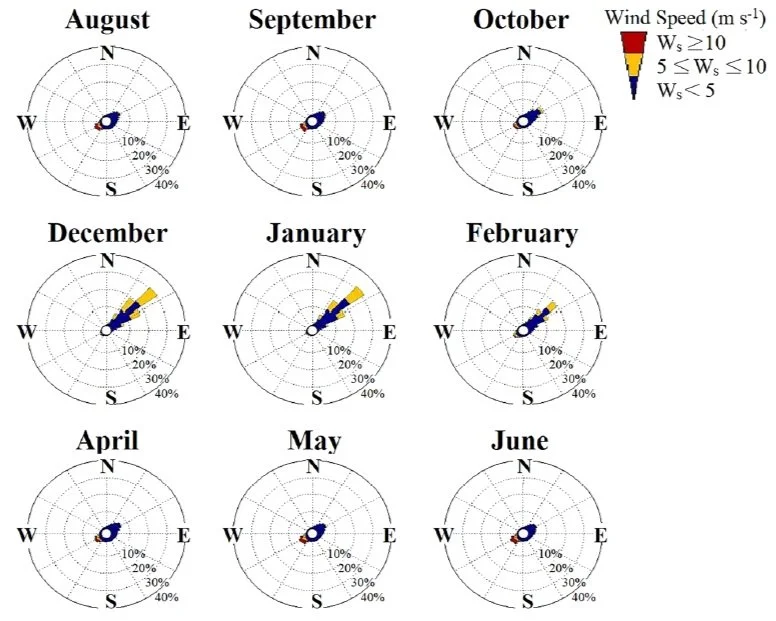
  • Rose Diagrams.

  • Root Mean Square Error. Correlation Coefficient. Correlation of determination.
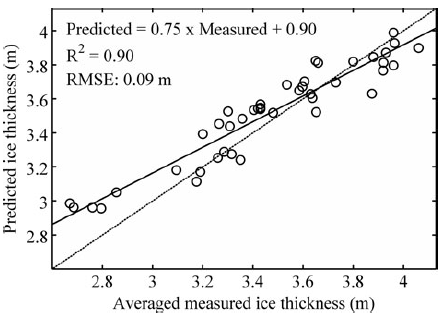
    Scatter plot comparing predicted and averaged measured ice thickness, with trend line and statistical data.
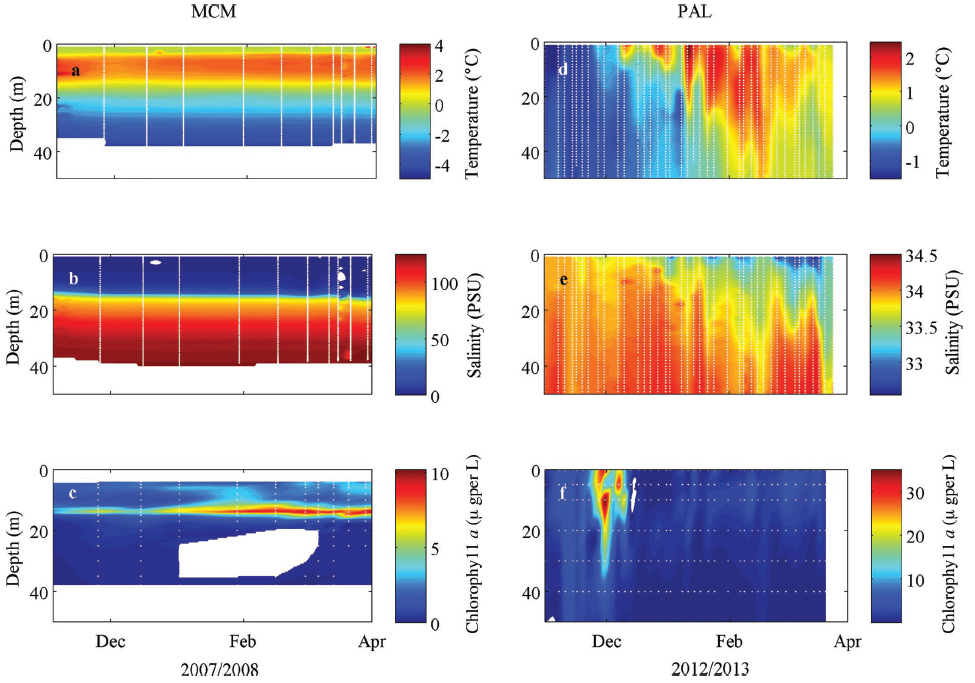
  • Data Interpolation.

    Six panels comparing oceanographic data between MCM and PAL stations, showing temperature, salinity, and chlorophyll a levels at various depths over time.
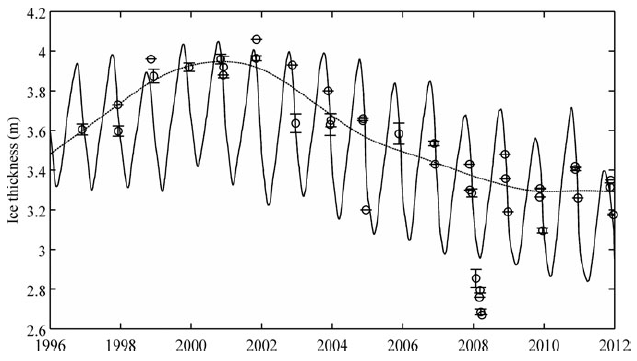
  • Curve Fitting.

    Graph showing ice thickness trend from 1996 to 2012 with seasonal fluctuations and a decreasing trend line.
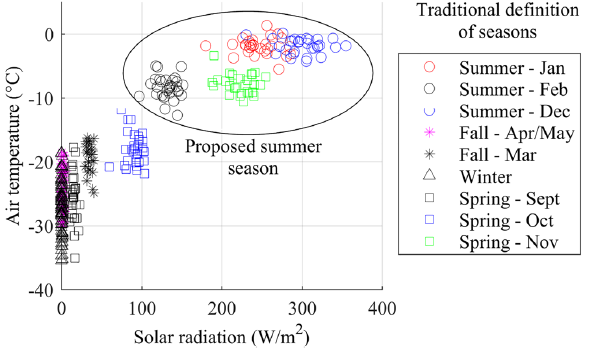
  • Cluster Analysis.

    Scatter plot showing air temperature (°C) versus solar radiation (W/m²), with data points representing traditional seasons. Colors and shapes denote months: Summer (circles in red, black, blue), Fall (stars in pink and crosses in black), Winter (triangles in pink), and Spring (squares in different blues and green). An oval highlights proposed summer season, indicating higher solar radiation and warmer temperatures. A legend on the right explains the symbols.
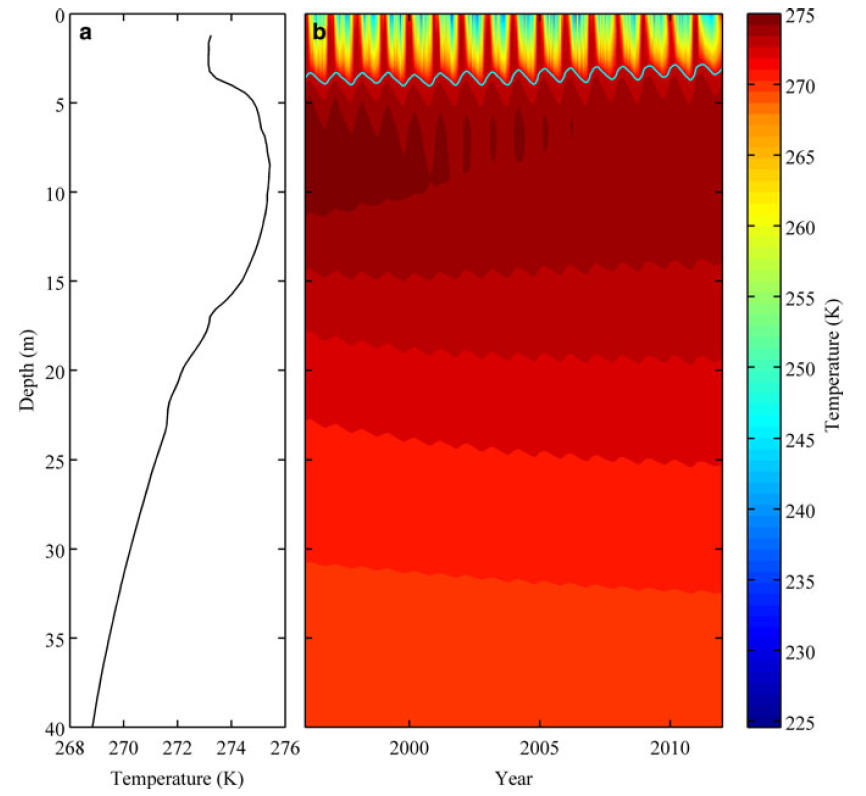
  • 3D data plotting.

    Graph showing temperature changes over time and depth. The left panel displays a line graph of temperature vs. depth in meters. The right panel is a heat map representing temperature changes from 1980 to 2010, with a color scale from blue (cold) to red (hot).
  • 3D Visualization.

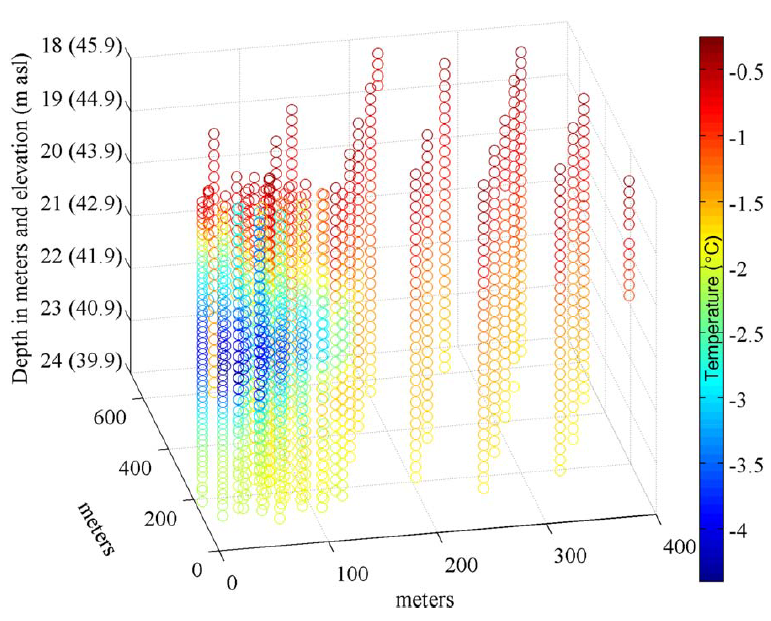
    3D scatter plot of depth and elevation against horizontal distance, with color-coded temperature scale from -4°C to -0.5°C